
Bivouac Camping in Wadi Rum What to Expect and How to Prepare
.jpeg/v1/fill/w_320,h_320/file.jpg)
The best nights in Wadi Rum don’t need glass walls, air-con, or a “Martian dome”. Sometimes the whole point is hearing nothing but the fire, the wind, and your own footsteps in the sand.
Bivouac Camping in Wadi Rum is the simplest way to sleep in the desert. It’s raw, quiet, and far more comfortable than most people imagine, as long as you know what you’re signing up for.

What Exactly is Bivouac Camping?
Bivouac camping means sleeping outdoors with no permanent walls around you. No hotel room. No fixed tent village. No plastic bubble. Just bedding, blankets, a sheltered spot, and the open desert.
In Wadi Rum, that usually means a Bedouin-style camp set up for the night in a protected natural area. Guides choose places that are sheltered from wind, often near rock formations or soft sand pockets. The setup may include mattresses, thick blankets, a fire area, and a simple eating space.
The key difference is that a bivouac is temporary. It doesn’t try to dominate the place. It leaves the desert feeling like the desert.
That matters in the Wadi Rum protected area, wadi rum,jordan, where the drama comes from the land itself. This is a UNESCO World Heritage site, known for its sandstone mountains, narrow canyons, natural arches, ancient inscriptions, and huge open valleys. A night outside puts all of that right in front of you.
Camping in Wadi Rum this way isn’t about roughing it for bragging rights. It’s about removing the layers between you and the place.
What to Expect Comfort, Bathrooms, and Food
Let’s be honest. The first questions are usually practical ones.
Where do you sleep? Where’s the toilet? What’s for dinner?
Good questions.

Sleeping is basic but cosy
Most bivouac nights use mattresses or padded bedding laid on carpets or mats. You’ll usually get heavy blankets, which matter more than you might expect. The desert can feel warm during the day, then turn cold after sunset, especially outside summer.
Don’t expect a hotel bed. Do expect something warm enough, clean enough, and much better than sleeping straight on the ground.
If you’re a light sleeper, bring earplugs anyway. Not because it’s noisy. Because the silence can feel strange at first.
Bathrooms are minimalist
Bivouac camping is not built around plumbing. Some trips use a simple private toilet setup a short walk from camp. Others rely on basic wilderness bathroom practices, depending on the operator and location.
A good guide will explain the setup before the night begins. Ask before booking if this matters to you. There’s no shame in wanting to know.
The main rule is simple. Respect the desert. Use the facilities provided, pack out tissues or hygiene waste when needed, and don’t leave anything behind.
Food is often the highlight
Dinner in Wadi Rum is one of the best parts of the night.
Many camps serve Zarb, a traditional Bedouin meal cooked underground. Meat and vegetables are placed on racks, lowered into a pit, covered, and slow-cooked with hot coals. The result is smoky, tender, and perfect after a day in the desert.
There’s usually tea too. Lots of it. Bedouin tea is often sweet, hot, and flavoured with herbs such as sage or mint. Around a fire, under a black sky, it tastes better than it has any right to.
Expect simple food, not fancy plating. Rice, salad, bread, cooked vegetables, chicken or lamb, and tea are common. If you’re vegetarian, vegan, or have allergies, say so clearly when booking.
A Wild Packing Checklist The 5 Items You Absolutely Need for the Deep Desert
You don’t need to pack like you’re crossing the Empty Quarter. But the deep desert rewards smart choices. Bring fewer things, but bring the right things.
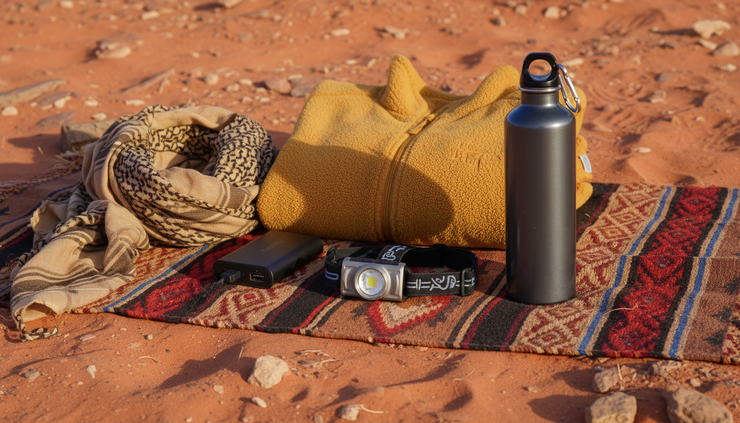
A warm layer
Bring a fleece, insulated jacket, or thick jumper. Even if the day feels hot, night temperatures can drop quickly in the desert.
A head torch
A phone light works badly when both hands are full. A head torch helps with walking to the bathroom spot, finding your bag, and moving around camp after dark.
A reusable water bottle
The air is dry, and you’ll lose moisture faster than you think. Most guides carry water, but having your own bottle nearby is easier.
A scarf or buff
This helps with sun, wind, dust, and cold. It’s one of the most useful things you can bring to Wadi Rum.
A small power bank
Don’t count on charging points in a bivouac camp. A power bank keeps your phone alive for photos, maps, or your alarm the next morning.
A few extras help too. Lip balm, sunglasses, sunscreen, wet wipes, and any personal medication should go in your day bag. Wear shoes that can handle sand and rock. Trainers are usually fine for most travellers, but sandals alone can get annoying fast.
Why Sleeping Under the Stars Beats a Plastic Dome
Plastic domes look exciting in photos. They promise comfort, views, and that “Mars camp” feeling. Fair enough. Some people love them.
But the real magic of Wadi Rum starts when there’s nothing between you and the sky.

There’s very little light pollution in the open desert. Once the campfire dies down and torches switch off, the night sky becomes huge. On a clear night, the Milky Way can be visible as a pale band across the sky. You don’t need an app to enjoy it. Just lie back and look up.
The silence is part of it too.
In a city, silence usually means a pause between traffic, voices, engines, or alarms. In the desert, silence has depth. You hear small things. Wind brushing rock. A blanket shifting. Firewood cracking. Footsteps in sand.
That’s hard to get inside a dome, even a nice one.
Bivouac camping also changes how the morning feels. You wake with the light, not a phone screen. The cliffs turn gold. The sand warms slowly. Someone starts tea. The day begins quietly.
That memory tends to stay longer than room features.
A Few Simple Tips Before You Book
Before choosing a bivouac trip, ask clear questions. A good operator won’t mind.
Ask where you’ll sleep, what bedding is included, what the bathroom setup is, and whether dinner is cooked on-site. Ask if the camp moves depending on weather. Ask what happens if there’s strong wind or rain.
Also check group size. A smaller camp often feels more peaceful. A larger one may feel more social. Neither is wrong, but they’re different nights.
If you’re visiting in winter, pack warmer than you think. If you’re visiting in summer, plan for heat during the day and bring sun protection. The desert doesn’t forgive lazy packing.
Desert camping works best when you arrive with the right mindset. Expect beauty, simplicity, dust, tea, stars, and a little inconvenience. That’s the deal. And honestly, that’s why it’s worth doing.
A bivouac night in Wadi Rum isn’t about having less comfort. It’s about getting more desert.
To read everything about Bivouac camping, or book your own trip, head to our page!


Comments